Bash Script Example For Running Java Program Mac
The icon is that “invalid app” icon and when I try to launch it, Finder tells me: You can’t open the application “MyTest” because it’s not supported on this type of Mac. And then, a split second later: You can’t open the application MyTest because it is not supported on this type of Mac. (No quotation marks, and “it is” instead of “it’s”.) I’m using OS X 10.6.8. 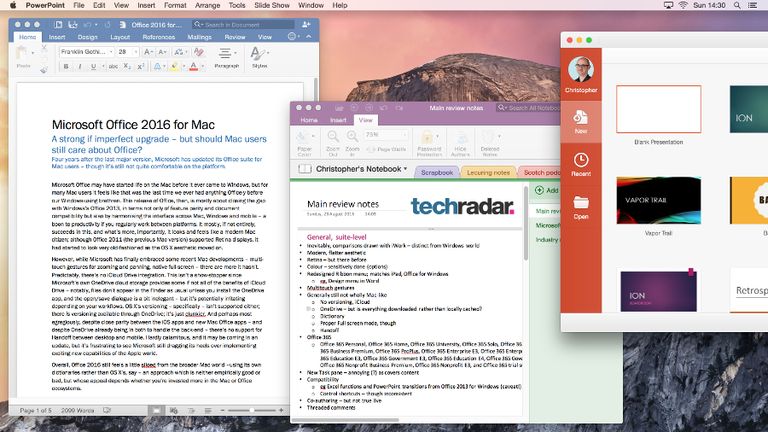 I appreciate the ability to copy & paste a custom icon into the selected icon in the new application’s “Get Info” dialog box. But for deployment reasons, I would like to add a.icns icon to the package, and know that it’s there by seeing it in the application’s Resources folder and see an entry for it in the application’s Contents/Info.plist file.
- Metaphor Example For Running
- Bash Script Example For Running Java Program Mac Windows 10
- Bash Script Example For Running Java Program Mac Terminal
Hi all, I need to run a bash script in Linux which will then run a java program. I managed to run the script successfully (and running the java program eventually) by doing./myScript. However, when my script is being called by some other programs, the java program doesn't run. I will add an item on a context menu, called 'Open with ABC'.This context menu appear when I right-clicked a folder. When the 'Open with ABC' is selected, it will launch a Java program, 'abc.class'.That Java program need 'directory path' of that chosen folder, as. I'm running the script from the same directory as the minecraft_server.jar, and it does nothing. I want it to open a terminal window that is running the java program. I am new to Linux so I'm sure I'm doing something stupid, any help would be appreciated. Put #!/bin/bash on the very first line of the file, which tells Ubuntu what program to use to run the file. Comments start with #, not rem. Hope this helps and have fun scripting!
Word for mac duplex printing enable. Confirm that the printer supports duplex printing with the printer vendor. Then, try to remove and re-add the printer from your configuration and see if this clears, check for printer driver updates (from the printer driver vendor, via Apple), check for printer firmware updates, then check with the printer vendor. As an example, I have an HP Officejet Pro K5400 Series printer, which is capable of duplexing. On the Advanced tab, there is a button for Printing Defaults. In that dialog, there is a setting for 'Print on both sides,' which has a choice of 'Off' and 'Automatically.' This is the same dialog I get if I click Properties in Word's Print dialog. Print a document in Word for Mac. Before you print, it’s a good idea to preview your document to make sure that it looks the way you want. You can also specify which pages you want to print and print on both sides of the page. Newly installed 64 bit Word 2016 for Mac. Using an Epson XP 340, print instruction will not allow duplex printing and no grayscale option. Printer has 64 bit connection. We just need to get the print dialog to come up. You won’t actually print. Turn on duplex/two-sided. Get the rest of your settings just the way you like them. Inside the print dialog, from the “Presets” menu, save your setting as “My Duplex”. Go back to Word and print. When you want “My Duplex”, just select it from the presets menu.
But I want listing from /home/Abc, without giving absolute path. So, do I need to execute 'cd' command which will get you to the home directory & then directly execute above 'ls' command to list all files & folders inside home directory.??? (I tried above, but not working & giving error as Cannot run program 'cd': java.io.IOException: error=2, No such file or directory) • Submitted by on September 15, 2009 - 10:15am In reply to by suyog (not verified). Something happens with the cd command here that doesn't work, and I'm not sure I fully understand it right now. I think it has to do with the fact that cd isn't really a command that exists on the filesystem, like the ls command, but instead is built into the shell.
How to Write a Bash Script on Windows 10 RELATED: When writing shell scripts on Windows, bear in mind that Windows and UNIX-like systems like Linux use different “end of line” characters in text files in shell scripts. In other words, this means that you can’t simply write a shell script in Notepad. Save the file in Notepad and it won’t be interpreted properly by Bash. However, you can use more advanced text editors–for example, allows you to give a file UNIX end-of-line characters by clicking Edit > EOL Conversion > UNIX/OSX Format. However, you’re better off just writing the shell script in the Bash environment itself.
Metaphor Example For Running
• Create an AppleScript with the following content, and save it as an application (in this example it is named 'Firefox 3 launcher.app'). Set pathToApp to (POSIX path of (path to me)) & 'Firefox 3.app' do shell script 'open -a ' & pathToApp & ' ' --args -P default -no-remote' • Got to that app in the Finder, right click it, show package contents.
When i use above code (with replacing command to 'ls') to display list. It displays the files & folders within current directory from where i had executed the code.
• To run a shell script, you need to make the file executable, which you can do with chmod +x • In Ubuntu, the current directory is not the program search path, so you need to run./, not • Variable names are $, not%% • Commands in a shell script are not printed by default, as in a batch file. • The filename's extension can be.sh or (more customary) you don't need to use an extension., which tells Ubuntu what program to use to run the file. • Comments start with #, not rem. Hope this helps and have fun scripting! You mean writing to a file using a shell script? Here are a few ways: touch file This method will simply create a file, but if the file already exists, it simply changes the modification date to the time you used that command.
• Next step is to create a folder anywhere you like and move the PDF to HTML5 jar into that folder, we’ll call it “ExampleFile”. • Next, get any PDF you wish to convert and move it into the ExampleFile folder you created, for this tutorial ours will be called examplePDF.pdf. • Next, create a.txt file and name it something like “ConvertPDF”, this will be where we write the BashScript.
For example, to create a bash script in nano, you’d run the following command in bash: nano ~/myscript.sh This would open the Nano text editor pointed at a file named “myscript.sh” in your user account’s home directory. (The “~” character represents your home directory, so the full path is /home/username/myscript.sh.) Start your shell script with the line: #!/bin/bash RELATED: Enter the commands you want to run, each one on its own line. The script will run each command in turn. Add a “#” character before a line to treat it as a “comment”, something which helps you and other people understand the script but which isn’t run as a command. For more advanced tricks, consult. The same techniques will work in Bash on Ubuntu on Windows. Note that there’s no way to run Windows programs from within the Bash environment.
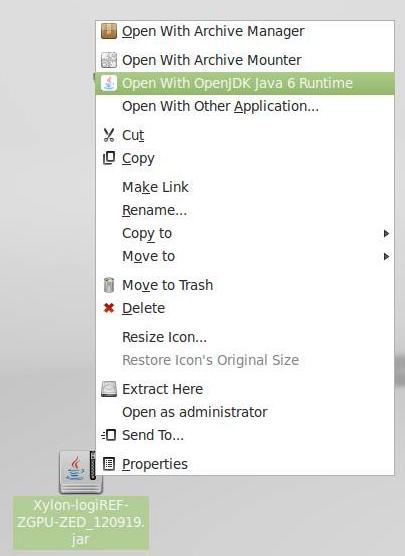
Hi All, well, i am facing this problem. I have tried a few sample codes but there isn't any solution. Could anyone please give a sample code as of how to do this. Please see the below details.and read the details carefully.
I also try to type: cd. Or dir for testing it worked too. However I was trying to input a command ( business sentitive, I cannot postup).
Typically to run a command on a remote machine, what you do is set up a program on that machine that 'listens' on a TCP/IP port for the commands you want to run. Then, from a client machine, you call that server and say 'run this command'. You can either program your server software to listen on a certain port, or use inetd/xinetd to listen on a port for you. I've described. Although that server example is in Ruby, all the same ideas hold true. Then, in another other tutorial I describe. If you search this site for 'java socket client' there are a couple of other examples as well.
There are two methods. First, the most common is to write a file, make sure the first line is #!/bin/bash Then save the file. Next mark it executable using chmod +x file Then when you click (or run the file from the terminal) the commands will be executed. By convention these files usually have no extension, however you can make them end in.sh or any other way. A few notes: • Any (and I mean any) file can be executed in Linux provided the first line is a path to the program that should interpret the file.
Download the 'Java exec' example source code I could go on at length about this topic, but the best thing I can recommend is that you download the source code and work with it for a while. Try running different commands to see if you can get them to work properly, and try to run a command that requires input (this will be a bit more complicated). To download the JavaRunCommand.java source code shown in Listing 1,. Once the file is displayed in your browser you can select the File Save As. Option of your browser to save the code to your local filesystem.
The first part is easy: Make sure your Perl script is executable (i.e., do a 'chmod +x' on your script), and make sure it runs just fine from the command line. Second, the easiest way to get it working from your JSP is to specify the full path to the Perl script instead of using a relative path. That is, if your Perl script is in a directory named /web/sites/myapplication, then you should call it with that directory, like this: /web/sites/myapplication/sso_example.pl Using the './sso_example.pl' command implies that the Perl script is in the 'current directory'. With a web application I don't know what the 'home' directory is, but it's either going to be the JVM's home directory, your web container's bin directory, or possibly your web application's directory. (Sorry I don't know this answer. I'm too lazy/busy to dig through the servlet specification, and I don't have any Java web apps running right now that I can test this with. I did just look at, and there I can see that the 'Real Path' is the directory of my web app, but that doesn't help much.) If you really want to know this.
I hope this helps! • Submitted by on August 23, 2009 - 1:41am.
Construction should be able to distinguish between them. About the bash question, it is probably a good idea to leave /bin/sh instead of /bin/bash, as it makes your script more portable, unless you use bash specifics unsupported on the real bourne shell.
What we need is a set of scripts that can run on any OS – enter Python. So how does Python fit in?
A shell parameter will fix that so it can't happen: #!/bin/sh JAR=/Applications/javahello.jar if [ -f '$JAR' ]; then echo 'File exists.' Java -jar '$JAR' & exit 0 else echo 'File doesn't exist.'
Bash Script Example For Running Java Program Mac Windows 10
I have a similar error. I ran it on windows 7 and got same erroe message. How, sir, can I resolve the problem?
Bash Script Example For Running Java Program Mac Terminal
That Java program need ' directory path' of that chosen folder, as argument. How my Bash script will look like? Informations you might need: • java: usr/bin/java • abc Java program: home/john/myapp/abc.class • The script will be put inside home/john/.config/caja/scripts • The john is my username for Linux Mint MATE 17.2, with caja as file manager Below questions might close to my problem: • • •. My Bash script looks like this: #!/bin/bash java -cp '$HOME/myapp' abc $CAJA_SCRIPT_SELECTED_FILE_PATHS Explanations: Since my program was placed inside here: /home/john/myapp/abc.class • I must always use -cp java options to locate my 'abc' program first.