How To Make Recovery Flash Drive For Mac Youtube
In this, you’ll learn the steps to make a macOS Sierra bootable USB installation on Windows 10, which you can use to reinstall or upgrade Apple’s OS. • • • Things to know before proceeding Before you dive into this guide, you’ll need a few things: • A broken Mac computer with Mac OS X or (version 10.12 or later). • A trial copy of the TransMac software. • One high quality USB flash drive with 16GB of storage.
To create a recovery disk, you need a USB flash drive or an external hard drive that has at least 1GB free space. You’ll also need access to a Mac running Yosemite that includes an existing.
Advertisement Want to put the OS X installer onto a a? Apple doesn’t provide an official tool to create bootable copies of their operating system, outside the recovery partition, but a third party tool called DiskMaker makes for a relatively painless process. Why would you want to do this? Lots of reasons, including if: • You plan to replace your Mac’s hard drive, so the restore partition isn’t an option. • You’re This 'How to Hackintosh' guide outlines what you need to do in order to build a power PC Hackintosh. This guide shows you the way.
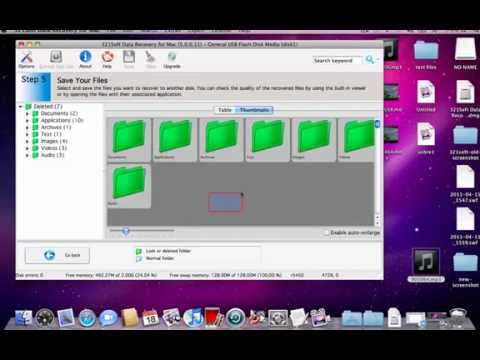
• Has caliber to get data off on Mac OS X from dead USB drive, inaccessible hard drive, non-mounting volumes and other storage mediums • Allow you to sort recovered data by name, file size, file type and date • Works incredibly well with almost all popular brands of flash drives and all versions of Mac OS X. Step by Step Guide to Recover Data from Dead Flash Drive: Step 1: Download and Install the demo version of the software on your Mac system and launch it to open the main screen as illustrated in figure 1. Before this make sure that dead flash drive is connected to Mac system and select ' Recover Volumes/Drives' option.
Quick Navigation: • • • • Have you ever found your USB device not recognized by computer? Clearly, this is an annoying thing since you'll lose access to all files and folders saved on that USB device. You definitely want to work this out to continue to use the device and regain the data, right? According to investigation, USB flash drive not recognized/USB flash drive not showing up/USB flash drive not working is a problem that plagues many users.
First, you should remember that the deleted files on the flash drive are not really erased but become inaccessible. The delete command just makes the files unrecognized by the file system. So deleted files can be retrieved from a flash drive with Mac data recovery software.
Once you’ve gone through all of the steps, DiskMaker will do its thing – eventually it will ask you for your password, so don’t walk away until you’ve done that. Step 4: Boot From External Drive When your drive is done, booting from it is simple. Power your Mac down, then hold the Option key as you turn it on. You should see a selection of drives: Just pick your drive, and eventually the OS X Installer will open. You can now install OS X, or use any of the utilities that come with the installer. Alternative: Install OS X to an External Drive.
The data present on the USB drive should be backed up to make sure that the user won't lose all their data if the partition fails. It is also to be noted that doing this will also allow the user to revert to the previous version quickly. Partition Software to Partition a Flash Drive Good should be used to make sure that the partitioning done in the best manner. The user should make sure that the support of the program as well as the features that have been embedded are the best. If the features are in line with the requirements, then the software will work the best and do the work for the user easily.
You should already have the OS X or macOS installer on your Mac. It will be located in the /Applications folder, with one of the following names: • • • • • A USB flash drive. That is 8 GB in size or larger. I suggest a flash drive in the 32 GB to 64 GB range, as they seem to be the sweet spot in cost and performance. The actual size of the bootable version of the installer varies, depending on which version of the Mac OS you're installing, but so far, none has gone over 8 GB in size. A Mac that meets the minimum requirements for the OS you're installing: • • • • If you have everything you need, let's get started, using the createinstallmedia command.
• Also in the mounted OS X Install ESD volume, you’ll find files named BaseSystem.chunklist and BaseSystem.dmg. Copy these files to the root (top) level of your install drive (OS X Base System, not into the System or Installation folder).
Should you need to use it to recover your computer, make sure the disk is connected, hold Option as you restart, then select the recovery disk from the list of drives. It’s a good idea to refresh this disk every now and then.
There isn't even an obvious option to run the app. Gatekeeper just might be.). You should be prompted with a choice: Pick which version of OS X you hope to install from your drive.
• Select BaseSystem.dmg in Disk Utility’s sidebar, and then click the Restore button in the main part of the window. • Drag the BaseSystem.dmg icon into the Source field on the right (if it isn’t already there). • Connect to your Mac the properly formatted hard drive or flash drive you want to use for your bootable Yosemite installer. • In Disk Utility, find this destination drive in the left sidebar.
Please note: Disk Drill does not provide any option to create bootable CD/DVD drives due to them becoming less popular and accessible in modern computers.
Finepix viewer for windows 7. The scan results will be displayed in the left pane. Just select the file(s) and click Recover Now button to get them back.
Click the ‘Restore’ button in the lower right of the main window. (Warning): this process will erase all content of the USB flash drive. You will be prompted that the process will erase the contents of the USB drive and then prompted for an administrator’s password to proceed. Once the process is complete, eject the USB drive as you normally would and then lock the drive.
• On the left pane, you’ll see all the Windows PC drives listed, right-click the USB drive you’re intending to use to reinstall Apple’s OS X and click Restore with Disk Image. • In the warning dialog box, click Yes. • Use the Restore Disk Image to Drive dialog box to browse for the DMG file with the installation files for Mac OS X Yosemite in this case, and click OK to create a bootable USB of the operating system. Now, you’ll have to wait a long time. It could take one or two hours to complete the process depending on your computer and other variables.
Click Finder in the upper left corner of the screen and select Preferences 2. Ensure the checkbox next to External disks is checked If the Finder preferences are set to mount external drives to the desktop we will need to determine if the USB flash drive is detected by the computer • Double click the MAC HDD • Double click Applications • Double Click Utilities • Select System Information • On the left side select USB If you see Flash Drive listed under the USB hub, the USB flash drive is detected properly. You can verify whether the drive is mounted by Selecting ' Go > Go to folder' from the file menu and typing /Volumes/. If not, you can follow step 2 to reset your USB flash drive. Reset USB Ports on Mac 1. Click the Apple logo and click ' Restart' to reboot your Mac laptop.
Having your mac boot from the USB is handy if your machine ever goes off the deep end or is corrupted. If you have other computers with similar versions of OS X you can even use this drive to recover data from that as well. It’s that simple & easy to create a recovery boot drive with Disk Drill. Now you may not need it today however having it ready made & available will save you tons of time & worry when something does go wrong & you need to recover that valuable data. So do yourself & your data a favor, create a mac boot drive today with Disk Drill.
Maybe you don’t want to install OS X from a USB drive, but actually boot the entire operating system from a USB drive. Good news: that’s possible.
So most people choose to. In this guide, we will introduce you to two methods that helps to erase data on USB flash drive permanently.
Part 2: Create an Advanced Password Reset CD/DVD or USB Flash Drive for Windows If you install Windows Password Recovery Tool on Windows PC, alternatively, you can choose Advanced Recovery Wizard to burn a bootable CD/DVD or a USB flash drive. This option will guide you step by step with clear wizards. It will help you select the Windows version of the target computer more precisely and burn bootable disk quickly. We also recommend it since this option can recover your forgotten Microsoft account password as well.
There are two ways to make a bootable copy of the installer; one makes use of, the command-line utility included with all copies of OS X and macOS; the other uses a combination of the,, and Terminal to get the job done. In the past, I've always shown you the manual method, which uses the Finder, Disk Utility, and Terminal. Although this method involves more steps, it's easier for many Mac users because the majority of the process uses familiar tools. This time around, I'm going to show you the Terminal app method, which uses a single command that has been included with the Mac OS installer since OS X Mavericks was released.
Mac driver for windows 7. More ways to shop: Visit an Apple Store, call 1-800-MY-APPLE, or find a reseller.
Here's how you can do make your own recovery disk using the assistant. First, you'll need to. It's a small file -- a little over a megabyte in size -- and once it was downloaded I opened the disk image and dragged the Recovery Disk Assistant app into my Utilities folder. Next, you'll need media. The 'disk' part of Recovery Disk Assistant is a bit misleading, since you can't actually use a blank DVD. I'd recommend going to your local OfficeMax / OfficeDepot / Staples / Walmart / Target to pick up a 4 GB flash drive.
Insure that Format is set to Mac OS X Extended (Journaled). When you have finished, click the Apply button to format the USB device. A warning will pop-up asking if you are sure you want to partition the media. Click the Partition button to continue. 9) Click on the newly created volume listed under the USB device on the left.
Click ' USB' to view a list of the USB devices connected to your Mac. Shut down the computer if you don't see one of your USB devices in the device list. Turn the computer back on. Hold the ' Command-Option-P-R' keys together before the gray screen appears until you hear the startup sound for the second time. Release the keys. Press the ' Command-Option-Esc' buttons to shut down applications that aren't responding.
Make Recovery Flash Drive
• A copy of Apple’s macOS (DMG file). How to make a macOS bootable USB installation media To create a bootable USB drive with the latest version of macOS, do the following: •. This is a paid software, but it gives you a 15-day trial, which is more than enough time.
Flash Player For Mac
4 Choose the format Click the drop-down list alongside Format and select Mac OS Extended (Journaled). Type a name into the field, then click Apply. Click the Partition button in the dialog. 5 Download the installer Once formatting has finished, head to and download the Recovery Disk Assistant. It doesn’t install – just run it from the.dmg archive. 6 Start Recovery Assistant Recovery Disk Assistant will instantly detect your USB stick, although you might have to click it.