Word 2011 For Mac Not Open With Ribbon
But it's still far less dreadful than either 2013 or 2016, partly because at least in Office 2011 - as in every PREVIOUS version - Toolbars are available and customizable, and the Ribbon is not only customizable but optional - i.e., you can turn the damned Ribbon OFF, if you wish, as you could in every previous Ribbonized version. To further customize the Ribbon, do the following: Open Word, Excel, or PowerPoint. Do either of the following: Choose application name > Preferences or press Command-, (comma). In the Preferences dialog box, click the Ribbon icon.
If prompted, select to allow the file(s) to be loaded by Word. Close and re-open Word when this is done. Note: With Word 2010/2013, the Ribbon tab may also be unchecked. Click on the File menu and select Options. Click on Customize Ribbon and Check EndNote if it is unchecked. Click OK to display the EndNote tab in the Word Ribbon.
Outlook 2011 For Mac Not Syncing With Exchange
Microsoft Outlook 2011 For Mac Not Responding
Apple Footer • This site contains user submitted content, comments and opinions and is for informational purposes only. Apple may provide or recommend responses as a possible solution based on the information provided; every potential issue may involve several factors not detailed in the conversations captured in an electronic forum and Apple can therefore provide no guarantee as to the efficacy of any proposed solutions on the community forums. Apple disclaims any and all liability for the acts, omissions and conduct of any third parties in connection with or related to your use of the site. All postings and use of the content on this site are subject to the.
Then rename or delete the existing Normal.dotm file. The next time Word opens, it creates a new Normal.dotm file based on default settings. You can overwrite the Normal.dotm template to use as Word’s default for new documents. Before starting the procedure, make a copy of the existing Normal.dotm file. You also need to know where the Normal template is located.
This approach makes it easy to show and hide windows relating to an application. If applications take over the full screen, as they almost always do on Windows, MDI works fine. With Apple's SDI approach, users can have many documents open on the desktop, which can become confusing. Apple has addressed this issue with a variety of ways to hide applications and related documents and palettes (Option + Click); Expose, which with a move of the mouse can provide various views documents as large 'thumbnails' for navigation; and Spaces, which lets users group applications into a more narrow workflow. Expose always amazes Windows users with its elegance and simplicity.
One way is to drag them from the Standard or Formatting toolbars. To copy buttons from either of these toolbars (which you made visible in step 1), hold down the Option key, click on a button, and then drag it to your new toolbar. This places a copy of the button on your toolbar—if you drag without holding the Option key, the button is moved to the new toolbar and will no longer appear on the original toolbar. Add as many buttons as you want to your toolbar: you may want to add buttons for styles, fonts, font size, bold or italic formatting, paragraph alignment, and so on. To add commands that don’t appear on these toolbars, go to the Customize Toolbars And Menus window, and click on the Commands tab.
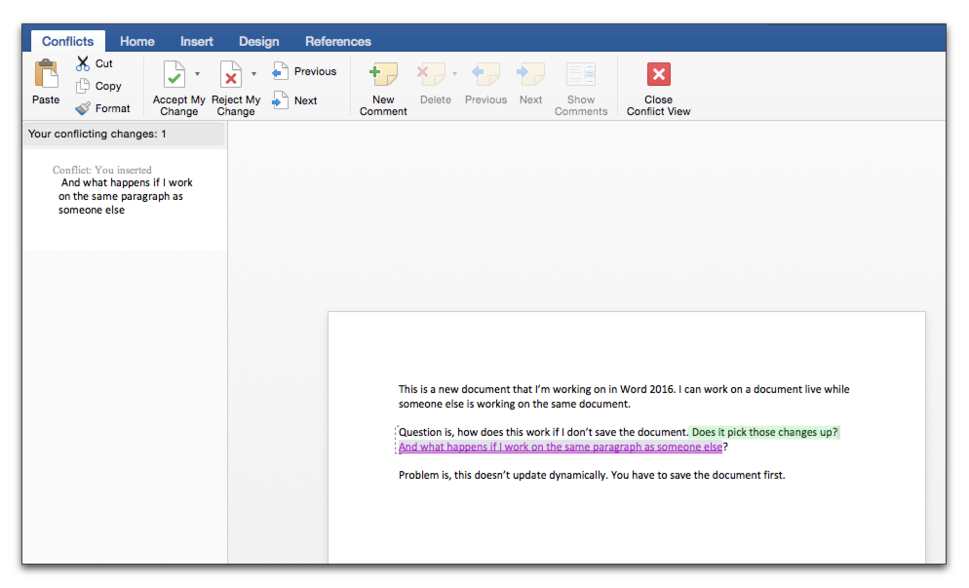
This will work for Word, Excel and PowerPoint applications. The old practice for earlier versions of Office would prevent users from opening the same document when edits were being made, usually causing in frustration for one or more parties, if a document was left open by mistake. Microsoft also promised to deliver a full version of Outlook in the Mac 2011 version. The full version of Outlook for Mac will include.PST file importing, Time Machine and Spotlight support. Users who are already familiar with Outlook for Windows should be comfortable with the Mac release.
No, that isn't an option. Can I set up Word so that when I insert an image in a document and double-click on it, it will open in the image editor of my choice? Unfortunately, no.
Still can't put a checkmark in? The above method worked insofar as I could add the actual box to my document; however to put a check in the box, I have to double click, then a small window appears in which I have to select whether or not I want the box checked, among other things. I just want to be able to click the box once and have a check appear, click it again and have it go away. I am sending this document out to colleagues and I know they don't want to double click 50 different boxes and go through 50 different pop up windows in order to go through their checklist.
• With Word open, click the Word menu and select About Word. If your version of Word is 15.xx or 16.xx, do not proceed! These steps will not work. If you have confirmed you are using MathType 6.7h and Word 2011, Windows: • With MathType open, expand the Help menu (by clicking it), and select About MathType.
If you didn't like the Ribbon in Office 2008, you probably won't like it now, but we think there's plenty of utility in having a common interface tool across all the apps. If you're still not convinced the Ribbon is worth your time, you can turn it off easily and use familiar drop-downs and palettes. The new Web apps and co-authoring features make Office 2011 a bit better than Google Docs solutions, letting you easily retain your original formatting and providing an easy way to switch from online to desktop with only a couple of clicks.
The above method worked insofar as I could add the actual box to my document; however to put a check in the box, I have to double click, then a small window appears in which I have to select whether or not I want the box checked, among other things. I just want to be able to click the box once and have a check appear, click it again and have it go away. I am sending this document out to colleagues and I know they don't want to double click 50 different boxes and go through 50 different pop up windows in order to go through their checklist.
Other users claim that once the new interface is learned, the average user can create 'professional-looking documents faster'. One study reported fairly good acceptance by users except highly experienced users and users of word processing applications with a classical WIMP interface, but was less convinced in terms of efficiency and organisation.
I’ll review each hard-to-find item on the Ribbon’s Home Tab in Excel 2010 (Windows) and let you know where they are located in Excel 2011 (Mac). I’ve even got some nifty pictures to speed along that understanding. Note: The Ribbons in Excel 2010 and 2007 (Windows) are interchangeable, but I’ll only refer to 2010 below. Each Ribbon Tab in Excel is organized by Groups. In Excel 2010 the Groups are shown at the bottom of the Ribbon. In Excel 2011 the Groups appear at the top, which I prefer.
If the option to 'Disable all Application Add-ins' is checked in Word 2007/2010/2013, that can also cause the tools to not appear. To turn off this setting, do the following: • Word 2007: Click on the Office icon and select 'Word Options.' Word 2010/2013: Click on the File ribbon and select 'Options.' • Click on 'Trust Center.' • Click 'Trust Center Settings.' • Click 'Add-ins.'
It allows you to make a multi-column page layout. • Line Numbers — This button opens a menu of options that tells Word to number each line in the left margin. • Hyphenation — This button opens a dialog box that allows you to change automatic hyphenation settings.
Visual styles provide you with consistent formatting that is easy to apply. Picture Editing gives you tools throughout the suite to crop, recolor, remove background and compress photos within your document. Charts and SmartArt gives you dozens of SmartArt layouts from more than 130 diagram layouts, ranging from organization charts to lists, processes and relationship diagrams.
Click on the small resize triangle at the bottom-right of the toolbar and drag it to the left. As you do this, you’ll see the toolbar change shape.
And with that, here comes the exciting part: What is the Office for Mac ribbon? Now, it is difficult for this longtime Mac user to believe that any Mac user (not on the Microsoft payroll) requested a first-class or even a second-class ribbon interface. While I am loath to doubt the word of Han-Yi Shaw, with whom I have had no word about this matter, perhaps we may infer that Microsoft bean-counters suggested that since the company owns the Ribbon interface and spent so much time and effort on it, naturally, all of its customers should gain the benefit of it, even on the Macintosh platform. And we should be happy for it.
There are several other new features, such as the Analysis ToolPak in Excel, plus a number of new themes and animation effects in PowerPoint, but it's this new look and feel for the ribbon that is the cornerstone of Office 2016 for Mac. PowerPoint includes new themes and animations, along with the redesigned ribbon. Image: Cliff Joseph/ZDNet Conclusion A new ribbon isn't going to have Mac users in businesses badgering their IT managers to upgrade them to Office 2016. However, this makeover for the ribbon isn't simply a cosmetic change. The more streamlined interface does make Word, Excel and PowerPoint feel less cluttered and easier to work with. And, by providing a look and feel that's consistent with other versions of Office, Microsoft is helping to ensure that users can remain productive by getting straight down to work regardless of where they are and what type of device or operating system they're currently using. Related Topics: Top ZDNET Reviews.
In November 2008 started the project Renaissance to improve the user interface of OpenOffice.org. So far the prototypes of the project are frequently seen as similar to ribbons, but this has resulted in some criticism from users. In July 2011, added a ribbon interface under license to Version 7.0 of their music notation application, replacing the of previous versions. This met with considerable user resistance, however the ribbon interface has to the current. Reaction [ ] Prior to Microsoft's introduction of ribbons in Office 2007, the user interface for its Office suites had barely changed since the introduction of Office 97 on 19 November 1996. ( and released relatively minor upgrades compared to, which itself was considered to be something of a milestone compared to.) Because of this, users became accustomed to this style of interface, which was common in many productivity products at the time.
Apple Footer • This site contains user submitted content, comments and opinions and is for informational purposes only. Best media player download for windows 10. Apple may provide or recommend responses as a possible solution based on the information provided; every potential issue may involve several factors not detailed in the conversations captured in an electronic forum and Apple can therefore provide no guarantee as to the efficacy of any proposed solutions on the community forums. Apple disclaims any and all liability for the acts, omissions and conduct of any third parties in connection with or related to your use of the site. All postings and use of the content on this site are subject to the.